
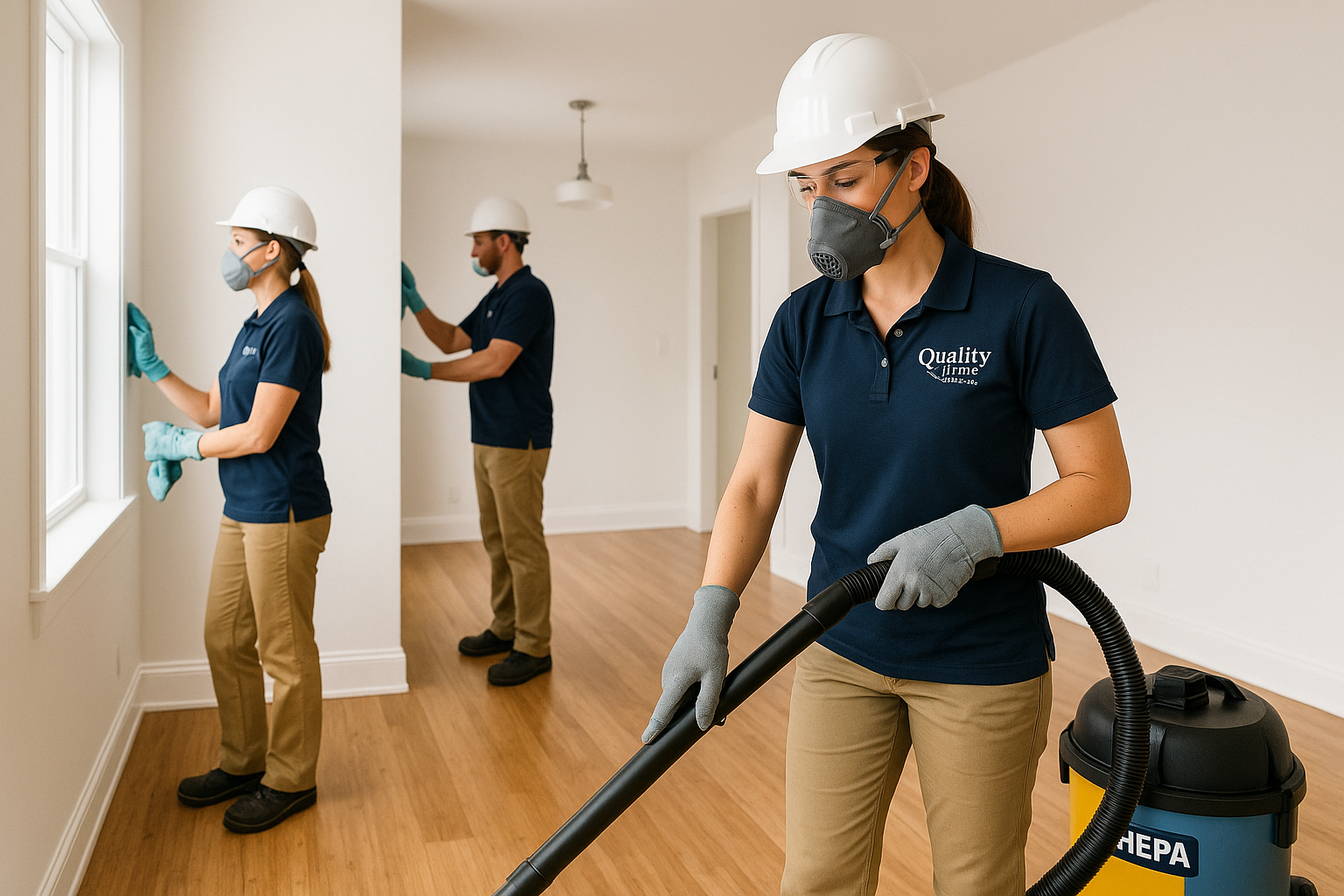
Post-construction cleaning is a specialized service that goes far beyond regular housekeeping. Whether you’re a general contractor finishing a commercial project or a homeowner wrapping up a renovation, understanding the three-phase cleaning process, OSHA safety requirements, and industry best practices will ensure your space is truly move-in ready. This comprehensive guide covers everything from hazardous material handling to final inspection standards, with specific attention to Pennsylvania market considerations.
What Makes Post-Construction Cleaning Different?
The residential and commercial cleaning industry is experiencing tremendous growth, with Grand View Research reporting the global market reached $415.93 billion in 2024. But post-construction cleaning represents a specialized niche that requires unique expertise, equipment, and safety protocols that go far beyond standard house cleaning services.
Post-construction cleaning addresses hazards that don’t exist in routine residential cleaning scenarios. Construction sites accumulate fine silica dust, adhesive residues, paint overspray, metal shavings, and other potentially dangerous materials. According to OSHA standards for construction site housekeeping, debris must be cleared regularly during construction and removed completely before occupancy to ensure worker and resident safety.
The key differences include:
Specialized debris removal: Construction projects leave behind materials like drywall dust, concrete residue, and wood shavings that require heavy-duty equipment. Standard vacuum cleaners aren’t designed for this level of debris—professional post-construction cleaning uses HEPA-filter vacuums to capture microscopic particles.
Phased approach: Unlike standard deep cleaning, post-construction work follows a three-phase process (rough clean, intermediate clean, final clean) that prevents damage to new installations and maximizes efficiency.
Safety compliance: Construction sites must meet OSHA housekeeping requirements that mandate clear passageways, proper waste disposal, and elimination of fall hazards—requirements that don’t apply to occupied residential homes.
Advanced chemical knowledge: Removing construction adhesives, grout haze, paint overspray, and sealant residue requires understanding which cleaning agents work on specific surfaces without causing damage.
For homeowners completing renovations in Chester County, Montgomery County, Bucks County, or Delaware County, understanding these differences helps set realistic expectations and ensures you hire qualified professionals for this specialized work.
Understanding the Three-Phase Post-Construction Cleaning Process
Professional post-construction cleaning services follow a systematic three-phase approach that has become the industry standard. Each phase has distinct objectives, timing, and techniques.
Phase 1: Rough Clean (Initial Debris Removal)
When to schedule: Immediately after construction work is complete but before final installations
The rough clean phase focuses on removing the bulk of construction debris and making the space safe for finishing work. This is the most physically demanding phase and typically takes the longest.
What gets done in Phase 1:
Large debris removal: All construction waste, including scrap lumber, drywall scraps, packaging materials, and damaged materials are removed. According to OSHA construction standard 1926.252, all scrap lumber and waste material must be removed from the immediate work area as the work progresses.
Floor debris clearance: Sweep and vacuum floors to remove nails, screws, staples, and other sharp objects that create immediate safety hazards. This protects both workers and the flooring itself from scratches and damage.
Window and door frame protection removal: Remove protective coverings, tape, and stickers from windows, doors, and fixtures. This reveals areas that need additional cleaning attention.
Dust removal from horizontal surfaces: Initial dusting of countertops, shelving, windowsills, and other accessible horizontal surfaces. This isn’t the final dusting—it’s removing heavy accumulation so finishing work can proceed.
HVAC protection verification: Confirm that HVAC systems remained covered during construction and remove protective coverings at the appropriate time. Running HVAC systems during construction can distribute fine dust throughout ductwork, requiring expensive remediation.
The rough clean for a typical 2,500-square-foot home renovation generally takes 6-10 hours with a two-person crew. Commercial projects in Montgomery County or Chester County may require multiple days depending on the project scope.
Phase 2: Intermediate Clean (Light Fixtures and Detailed Surface Cleaning)
When to schedule: After rough cleaning but before final installations like light fixtures, switch plates, and hardware
Phase 2 addresses areas that are now accessible after rough cleaning and targets the fine dust and residues that rough cleaning couldn’t fully address.
What gets done in Phase 2:
Window and glass cleaning: Thoroughly clean all windows inside and out, removing stickers, tape residue, paint splatter, and construction film. This typically requires specialized glass cleaners and razor scrapers for hardened materials.
Cabinet and countertop cleaning: Deep clean all cabinetry inside and out, removing sawdust, shelf liner adhesive, and manufacturer’s stickers. Clean countertops with appropriate products for the specific material (granite, quartz, laminate each require different approaches).
Wall and ceiling detailing: Address scuff marks, paint drips, and dust accumulation on walls and ceilings. Use appropriate cleaning methods based on wall finish—flat paint requires different care than semi-gloss or high-gloss finishes.
Fixture and hardware pre-installation cleaning: Clean light fixtures, switch plates, outlet covers, and hardware before installation to avoid having to clean around installed fixtures.
Bathroom and kitchen detailing: Remove grout haze from tile, clean newly installed toilets and sinks, address caulk residue around tubs and showers. Deep cleaning these areas now prevents issues after occupancy.
Floor care based on type: Different flooring requires different approaches at this stage. Hardwood may need dust mopping and special pH-neutral cleaners, while tile needs grout haze removal and sealing consideration.
For projects in Bucks County and Delaware County, this phase typically takes 4-8 hours for residential projects and ensures the space is ready for the finishing touches.
Phase 3: Final Clean (White-Glove Finish)
When to schedule: After all construction, installation, and touch-up work is 100% complete
This is the final polish that makes the space move-in ready. No construction workers should enter the space after final cleaning begins.
What gets done in Phase 3:
Complete top-to-bottom dusting: Methodical dusting of every surface, working from ceiling to floor. This includes light fixtures, ceiling fans, crown molding, baseboards, door frames, and every accessible surface.
Detailed glass and mirror polishing: Final streak-free cleaning of all glass surfaces, mirrors, and chrome fixtures to showroom condition.
Floor deep cleaning based on type:
-
Hardwood: Remove any remaining dust, mop with appropriate wood floor cleaner, buff to shine
-
Tile: Final grout line cleaning, removing any cleaning residue, buffing to shine
-
Carpet: Professional deep extraction cleaning to remove ground-in construction dust
-
Vinyl/Laminate: Strip cleaning residue, apply appropriate finish if needed
Kitchen and bathroom perfecting: Make appliances showroom-ready, polish faucets and fixtures, ensure no water spots or fingerprints remain. These high-visibility areas create the first impression for new occupants.
Air vent and register cleaning: Remove and clean all air vent covers, wipe down vent openings to remove dust accumulation.
Switch plate, outlet cover, and hardware final cleaning: Remove fingerprints and smudges from all newly installed electrical plates and door/cabinet hardware.
Final inspection walkthrough: Systematic room-by-room review to ensure nothing was missed, addressing any remaining issues before handover.
This final phase for a 2,500-square-foot home typically requires 4-6 hours with a professional crew and brings the space to move-in condition that meets or exceeds homeowner expectations.
OSHA Safety Standards for Post-Construction Cleaning
Professional post-construction cleaning must comply with federal safety regulations designed to protect workers from the unique hazards present on construction sites. Understanding these standards helps property owners, contractors, and cleaning crews maintain safe work environments.
Critical OSHA Requirements for Construction Housekeeping
OSHA Standard 1926.25(a) addresses housekeeping during construction, stating that “during the course of construction, alteration, or repairs, form and scrap lumber with protruding nails, and all other debris, shall be kept cleared from work areas, passageways, and stairs.”
Key compliance areas include:
Passageway clearance: All walkways, corridors, stairwells, and exit routes must remain clear of debris at all times. This isn’t just a cleaning issue—it’s a life-safety requirement ensuring emergency egress remains available.
Protruding nail removal: Any lumber with exposed nails must be immediately removed or nails must be bent down or removed. This addresses one of the most common causes of puncture wounds on construction sites.
Waste containment and removal: Combustible scrap and debris must be removed at regular intervals during construction. OSHA requires containers for waste collection and separation.
Fall hazard elimination: Construction materials cannot be stored in a manner that creates fall hazards or impedes movement through the workspace.
For commercial projects requiring commercial cleaning services in Montgomery County and Chester County, these OSHA requirements extend throughout the cleaning process until final inspection and certificate of occupancy.
Personal Protective Equipment Requirements
Post-construction cleaning presents exposure risks that don’t exist in regular house cleaning scenarios. OSHA’s PPE standards require appropriate protection based on the specific hazards present.
Required PPE for post-construction cleaning:
Respiratory protection: HEPA-rated or N95 respirators when working with fine dust, particularly silica-containing materials like concrete or drywall dust. Silica exposure can cause serious lung disease, making respiratory protection non-negotiable.
Eye protection: Safety glasses or goggles when cleaning overhead surfaces, using chemical cleaners, or working in areas with airborne particles.
Hand protection: Chemical-resistant gloves appropriate for the cleaning agents being used. Different chemicals require different glove materials—nitrile gloves protect against some chemicals while neoprene or PVC may be needed for others.
Foot protection: Closed-toe shoes with puncture-resistant soles. Construction sites often contain hidden sharp objects that can penetrate standard footwear.
Hearing protection: When using loud equipment like industrial vacuums or power washers, hearing protection prevents long-term hearing damage.
Professional post-construction cleaning companies invest in proper PPE and train their crews on correct usage. This protects workers and demonstrates professional standards that distinguish qualified contractors from inadequately prepared operations.
Hazardous Material Identification and Handling
Construction sites may contain materials requiring special handling protocols. OSHA’s Hazard Communication Standard requires that workers be informed about hazardous materials they may encounter and trained in proper handling procedures.
Common hazardous materials in post-construction cleaning:
Lead dust: Projects involving pre-1978 buildings may have lead paint dust. Lead exposure causes serious health effects and requires specific containment, cleaning, and disposal procedures.
Asbestos fibers: Although asbestos use has declined, renovation of older buildings may disturb asbestos-containing materials. Asbestos cleaning requires specialized certification and cannot be performed by standard cleaning crews.
Silica dust: Cutting, grinding, or demolishing concrete, masonry, or tile creates crystalline silica dust. OSHA has specific exposure limits and requires respiratory protection when silica is present.
Chemical residues: Paint thinners, solvents, adhesive removers, and other construction chemicals may remain on surfaces or in containers. These require proper disposal following local hazardous waste regulations.
Mold growth: If water intrusion occurred during construction, mold may have developed. Mold remediation requires specific protocols beyond standard cleaning.
For Pennsylvania projects, particularly older homes in Bucks County and Delaware County, awareness of potential lead and asbestos is critical. Professional cleaning companies conduct pre-cleaning assessments to identify potential hazards before work begins.
Essential Equipment for Post-Construction Cleaning
The equipment requirements for post-construction cleaning differ significantly from standard house cleaning tools. Using inadequate equipment not only produces poor results but can damage new installations and extend timelines.
Specialized Vacuum Systems
Standard residential vacuums cannot handle the volume and type of debris present after construction. Professional post-construction cleaning requires industrial-grade equipment.
HEPA-filter commercial vacuums: High-Efficiency Particulate Air (HEPA) filters capture 99.97% of particles 0.3 microns or larger. This level of filtration is essential for capturing the fine dust that permeates construction sites and can trigger allergies or respiratory issues.
Shop vacuums with multiple attachments: Heavy-duty wet/dry vacuums handle both liquid spills and heavy debris. Multiple attachments allow cleaning in corners, crevices, and around new fixtures without causing damage.
Backpack vacuums for detailed work: These provide mobility for cleaning stairs, high surfaces, and tight spaces where standard vacuums are impractical.
Floor buffer/scrubber machines: For hard surface floors, commercial-grade buffers and scrubbers remove ground-in dirt and restore shine to tile, concrete, and vinyl flooring.
Investing in or renting proper equipment significantly impacts results. For property managers overseeing multiple projects in Chester County and Montgomery County, partnering with a commercial cleaning service that maintains this equipment creates consistency across projects.
Surface-Specific Cleaning Tools
Different surfaces installed during construction require different cleaning approaches and tools.
Glass and window cleaning tools:
-
Professional-grade squeegees with replaceable rubber blades
-
Extension poles for high windows
-
Razor blade scrapers for removing paint, stickers, and adhesive
-
Microfiber glass cleaning cloths that leave no lint
Floor cleaning implements:
-
Microfiber mops for hardwood and laminate (never use traditional string mops that can damage wood)
-
Grout brushes and grout cleaning tools for tile
-
Carpet extraction machines for new carpeting
-
pH-neutral cleaners specific to each flooring type
Detail cleaning tools:
-
Extendable dusters for high ceilings and crown molding
-
Detailing brushes for textured surfaces
-
Microfiber cloths in various textures for different surfaces
-
Steam cleaners for sanitizing bathrooms and kitchens without chemicals
Safety and access equipment:
-
Stable ladders rated for the worker’s weight plus equipment
-
Knee pads for floor-level work
-
Drop cloths to protect newly installed flooring during ceiling and wall cleaning
Professional deep cleaning services maintain these specialized tools and replace them regularly to ensure optimal performance and prevent surface damage from worn equipment.
Common Post-Construction Cleaning Challenges and Solutions
Even with proper planning and equipment, post-construction cleaning presents unique challenges. Understanding common problems and proven solutions helps contractors and homeowners anticipate and address issues efficiently.
Challenge #1: Grout Haze on New Tile
The problem: After tile installation, a cement-based haze remains on tile surfaces that regular cleaning can’t remove. This haze obscures the tile’s natural shine and can harden if not addressed promptly.
Why it happens: During grouting, excess grout material combines with minerals and settles on the tile surface. If not removed within 24-48 hours of installation, it becomes increasingly difficult to eliminate.
Professional solution:
-
Use pH-specific grout haze removers designed for the tile type (natural stone requires different products than ceramic)
-
Apply with microfiber cloths in circular motions
-
Rinse multiple times to remove all chemical residue
-
Buff to shine with dry microfiber cloths
-
Never use acidic cleaners on natural stone—they etch and damage the surface
For homes with new tile installations in Bucks County and Delaware County, addressing grout haze properly during post-construction cleaning prevents long-term appearance issues and protects the tile investment.
Challenge #2: Paint Overspray and Splatter
The problem: Despite masking and careful work, paint inevitably ends up on windows, hardware, floors, and fixtures. Removing it without damaging the underlying surface requires specific techniques.
Professional solution:
On glass: Use single-edge razor blade scrapers held at 45-degree angle to lift paint without scratching glass. Keep glass wet during scraping and wipe frequently.
On hardware: Use appropriate paint removers based on the paint type (water-based vs. oil-based) and hardware finish. Test in inconspicuous areas first.
On flooring: Hardwood floors require gentle paint removers that won’t damage the finish. Tile can handle stronger chemicals. Never use abrasive scrubbing on hardwood.
On fixtures: Soak dried paint with appropriate solvent, then gently scrape or wipe away. Rushing this process damages finishes.
The key is identifying the paint type, the surface material, and using compatible removal methods. Professional post-construction cleaning crews maintain libraries of product knowledge to handle these situations correctly.
Challenge #3: Fine Dust That Keeps Reappearing
The problem: Even after thorough cleaning, fine dust continues to appear on surfaces. This frustrating issue makes spaces feel incomplete and can delay occupancy.
Why it happens: Construction dust is incredibly fine and becomes airborne with any air movement. It settles in HVAC ducts, light fixtures, ceiling fans, and other hidden locations, then redistributes when air systems run.
Professional solution:
-
Clean HVAC vents and returns before running the system
-
Replace HVAC filters immediately before final cleaning (they’re saturated with construction dust)
-
Use HEPA vacuums that capture fine particles rather than redistributing them
-
Work systematically from top to bottom, cleaning ceiling areas before floor areas
-
Allow adequate time between cleaning phases for dust to settle
-
Consider running air purifiers during and after cleaning
-
Change HVAC filters again 30 days after occupancy
This multi-step approach addresses both visible dust and hidden reservoirs that cause ongoing issues. It’s one reason why post-construction cleaning requires more time and expertise than standard house cleaning services.
Challenge #4: Adhesive and Sticker Residue
The problem: Manufacturers apply stickers and protective films to new appliances, windows, fixtures, and mirrors. Removing these leaves sticky residue that attracts dirt and looks unprofessional.
Professional solution:
-
Use heat (hairdryer or heat gun on low setting) to soften adhesive before attempting removal
-
Apply adhesive removers appropriate for the surface (Goo Gone, denatured alcohol, or commercial adhesive removers)
-
Allow adequate dwell time for the solvent to break down the adhesive
-
Use plastic scrapers (never metal) to gently lift softened adhesive
-
Clean residual oils with appropriate surface cleaners
-
Buff to shine with microfiber cloths
Different adhesives require different approaches. Professional cleaners test multiple methods to find what works without damaging the underlying surface.
Challenge #5: Stained or Damaged New Materials
The problem: Sometimes construction activities stain or damage new installations—concrete splatter on new hardwood, scratches on new countertops, or chemical stains on new cabinets.
When to clean vs. when to replace: Professional post-construction cleaning crews document these issues during initial walkthrough and consult with contractors before attempting remediation. Some damage can be cleaned or buffed out. Other damage requires replacement or professional restoration.
Documentation importance: Photograph all damage before cleaning begins. This protects both the cleaning company and the contractor by establishing when damage occurred and who is responsible for remediation.
For projects in Montgomery County and Chester County, clear communication between general contractors, homeowners, and cleaning crews prevents disputes and ensures issues are addressed appropriately.
Preparing for Post-Construction Cleaning
Proper preparation accelerates the cleaning process and prevents damage to new installations. Whether you’re a contractor preparing to hand over a project or a homeowner managing your own renovation, following these preparation steps ensures better results.
Pre-Cleaning Contractor Responsibilities
Before post-construction cleaning begins, contractors should complete specific tasks:
Complete all construction punch list items: Address any remaining construction work, touch-ups, or repairs before cleaners arrive. Bringing construction workers back after cleaning creates additional dust and requires re-cleaning.
Remove all tools, equipment, and materials: The job site should be free of construction debris, excess materials, and contractor equipment. Cleaning crews shouldn’t be responsible for removing building materials.
Install all fixtures and hardware: Light fixtures, switch plates, outlet covers, cabinet hardware, and bathroom accessories should be fully installed. Installing these after cleaning leaves fingerprints and creates additional work.
Verify HVAC system status: Confirm whether HVAC filters have been changed and whether the system has been professionally cleaned if dust infiltration occurred during construction.
Provide access information: Ensure cleaning crews have keys, access codes, and contact information for any lockboxes or security systems.
Identify any problem areas: Communicate any known issues like adhesive spills, paint overspray, or damaged materials that require special attention.
Clear communication between contractors and post-construction cleaning services prevents delays and ensures everyone understands the project scope.
Homeowner Pre-Cleaning Checklist
For homeowners coordinating their own post-construction cleaning:
Confirm construction completion: Don’t schedule cleaning until all construction activities are 100% complete. Even minor touch-up work creates dust that requires re-cleaning.
Discuss cleaning phases: Understand whether you need all three cleaning phases or just final cleaning. If your contractor performed rough and intermediate cleaning, verify the quality before paying for redundant services.
Identify surface types: Document what materials were installed—hardwood species, tile types, countertop materials, cabinet finishes. Professional cleaners need this information to select appropriate products.
Remove personal belongings: If the home is occupied during construction, remove or cover furniture, clothing, and personal items in affected areas to prevent dust contamination.
Establish clear communication: Provide contact information and expected communication methods. Will you be on-site during cleaning? Do you prefer text updates or phone calls?
Arrange for waste disposal: Some cleaning services include construction debris disposal; others expect the contractor to handle this. Clarify expectations before work begins.
Plan for ventilation: Open windows during cleaning if weather permits. Good air circulation helps remove lingering dust and chemical odors from new materials.
For renovations in Chester County, Bucks County, and Delaware County, coordinating these details with your post-construction cleaning service creates realistic expectations and prevents miscommunication.
Environmental Considerations in Post-Construction Cleaning
The cleaning industry is experiencing significant growth in eco-friendly practices. GM Insights reports the eco-friendly cleaning products market reached $12.2 billion in 2024 and will grow at over 10% annually through 2034. Post-construction cleaning presents unique opportunities and challenges for implementing green cleaning practices.
Green Cleaning Product Selection
According to market research by Gitnux, 70% of consumers worry about chemicals in cleaning products. This concern is especially relevant in post-construction scenarios where new homeowners or tenants will immediately occupy the space.
EPA Safer Choice certified products: The EPA’s Safer Choice program certifies products that meet rigorous criteria for human health and environmental safety. Industry data shows over 60% of green cleaning providers now use EPA Safer Choice certified products.
Benefits of green cleaning for new spaces:
-
Eliminates chemical odors that can be overwhelming in newly cleaned spaces
-
Reduces volatile organic compounds (VOCs) that off-gas and affect indoor air quality
-
Safe for families with young children, pets, or chemical sensitivities
-
Aligns with green building practices (LEED certification considerations)
-
The EPA states that green cleaning products can reduce indoor air pollutants by 30%
Product selection considerations: Not all “green” or “natural” products meet professional performance standards for post-construction cleaning. Professional services select certified products that deliver both environmental benefits and the cleaning power needed for construction residues.
Homeowners in high-income areas like Montgomery County (median income $111,521) and Chester County (median income $123,041) increasingly request green cleaning options, according to U.S. Census data. This aligns with Bureau of Labor Statistics data showing a 12% employment increase in green cleaning companies over the past three years.
Sustainable Waste Disposal Practices
Post-construction cleaning generates significant waste that requires proper disposal. Sustainable practices benefit both the environment and project costs.
Waste segregation: Separate recyclable materials (cardboard, certain plastics, metal scraps) from general waste. Many municipalities in Pennsylvania offer construction debris recycling programs that reduce landfill fees.
Hazardous material handling: Materials like paint cans, chemical containers, and certain cleaning products require disposal at hazardous waste facilities. Never pour chemicals down drains or place them in regular trash.
Donation opportunities: Usable materials like excess fixtures, undamaged tile, or leftover building materials can be donated to Habitat for Humanity ReStores or similar organizations, creating tax deductions while supporting community programs.
Water conservation: Modern cleaning equipment uses significantly less water than traditional methods while achieving better results. Commercial-grade extractors and microfiber systems reduce water consumption by 60-90% compared to traditional mopping.
Professional post-construction cleaning services in Pennsylvania handle waste disposal in compliance with state and local regulations, preventing improper disposal that can result in fines and environmental damage.
Cost Factors and Timeline Planning
Understanding cost factors and realistic timelines helps contractors and homeowners budget appropriately and set realistic expectations for post-construction cleaning.
Factors Affecting Post-Construction Cleaning Costs
Several variables influence the final cost of post-construction cleaning services:
Project size and complexity: Square footage is the primary cost driver, but layout complexity matters. Open floor plans clean faster than spaces with many small rooms. High ceilings require additional equipment and time.
Cleaning phase requirements: Full three-phase cleaning costs significantly more than final cleaning only. If contractors perform rough and intermediate cleaning, final cleaning alone reduces costs substantially.
Surface types and conditions: Homes with extensive tile (requiring grout haze removal), many windows, or delicate surfaces requiring specialized care cost more to clean than simpler installations.
Accessibility challenges: Multi-story homes, buildings without elevators, or sites with limited parking for equipment increase labor time and costs.
Timeline pressures: Rush jobs or jobs requiring weekend/evening work typically carry premium pricing.
Location within service area: Properties in Chester County and Montgomery County may have different pricing than those in Bucks County or Delaware County based on travel time and local market conditions.
Additional services: Services like HVAC cleaning, carpet deep cleaning, or specialty surface treatments add to base costs.
According to U.S. Census data, Pennsylvania’s median household income is $80,060 (2024), but the counties Quality Time Cleaning serves show significantly higher incomes, suggesting strong demand for professional services. The U.S. Department of Commerce projects that 80% of two-income households will use professional cleaning services in the near future—a statistic particularly relevant to Pennsylvania’s affluent suburban counties.
Timeline Expectations for Different Project Types
Residential renovation (1,500-2,500 sq ft):
-
Rough clean: 4-8 hours
-
Intermediate clean: 3-6 hours
-
Final clean: 3-5 hours
-
Total timeline: Can be completed in 2-3 days if phases are scheduled consecutively
Whole house renovation (2,500-4,000 sq ft):
-
Rough clean: 8-12 hours
-
Intermediate clean: 6-8 hours
-
Final clean: 5-8 hours
-
Total timeline: 3-5 days with proper coordination
Small commercial project (under 5,000 sq ft):
-
Rough clean: 10-16 hours
-
Intermediate clean: 8-12 hours
-
Final clean: 6-10 hours
-
Total timeline: 4-7 days depending on complexity
Large commercial project (10,000+ sq ft):
-
May require multiple crews working simultaneously
-
Timeline depends on specific project requirements
-
Coordination with general contractor and occupancy schedules critical
These estimates assume professional crews with appropriate equipment working without delays from ongoing construction activities. Requiring cleaning crews to work around active construction extends timelines and increases costs.
For commercial projects requiring commercial cleaning services, scheduling cleaning phases to align with construction milestones optimizes both construction and cleaning efficiency.
Choosing the Right Post-Construction Cleaning Service
Selecting a qualified post-construction cleaning service impacts both the quality of the final product and the overall project timeline. Not all cleaning companies have the expertise, equipment, or insurance coverage to handle post-construction work safely and effectively.
Essential Qualifications to Verify
Insurance coverage: Post-construction cleaning companies must carry both general liability insurance and workers’ compensation coverage. Construction sites present more hazards than occupied homes, and accidents can result in significant claims. Verify current coverage before signing contracts.
OSHA safety training: Cleaning crews working on construction sites should understand OSHA safety requirements, proper PPE usage, and hazard identification. Ask about company safety training programs.
Equipment and supply quality: Companies should own or have reliable access to commercial-grade HEPA vacuums, floor machines, and specialized cleaning tools. Attempting post-construction cleaning with residential equipment produces poor results.
Experience with similar projects: Ask for references from contractors or homeowners with similar project types. A company with extensive residential experience may not be equipped for large commercial projects.
Surface-specific expertise: Verify that the company understands how to clean specific materials in your project—natural stone, specialty glass, exotic hardwoods, custom cabinetry. Improper cleaning can permanently damage expensive installations.
Waste disposal procedures: Confirm that the company properly disposes of construction debris and hazardous materials in compliance with local regulations.
Communication and scheduling reliability: Construction timelines shift frequently. Work with companies that communicate proactively and accommodate schedule changes when possible.
Red Flags to Watch For
Certain warning signs indicate a company may not be qualified for post-construction work:
-
Quotes that seem dramatically lower than competitors (may indicate inadequate insurance, inexperienced workers, or shortcuts)
-
Inability to provide proof of insurance and workers’ compensation
-
Reluctance to provide references or examples of similar completed projects
-
No understanding of the three-phase cleaning approach
-
Claims they can complete the work in unrealistically short timeframes
-
Unwillingness to discuss specific products and equipment they’ll use
-
No clear process for addressing problems or damage that occurs during cleaning
Questions to Ask Before Hiring
“What specific experience do you have with post-construction cleaning?” Look for detailed responses describing past projects similar to yours, not generic claims of “years of experience.”
“How do you handle the three cleaning phases?” The company should describe rough, intermediate, and final cleaning and help you determine which phases you need.
“What equipment will you use?” Verify they have commercial-grade HEPA vacuums, appropriate floor care machines, and specialized tools for your project’s surface types.
“How do you protect newly installed surfaces during cleaning?” They should describe specific procedures for working around new installations without causing damage.
“What happens if something is damaged during cleaning?” Understand their process for reporting, documenting, and resolving any issues.
“Are your employees covered by workers’ compensation?” This protects you from liability if a worker is injured on your property.
“What products will you use, and are they safe for my specific surfaces?” This reveals whether they understand your materials and use appropriate cleaners.
“What is your typical timeline for a project like mine?” Compare their estimate to industry standards. Significantly faster timelines may indicate rushed work.
For homeowners in Chester County, Montgomery County, Bucks County, and Delaware County, thorough vetting protects your renovation investment and ensures the final cleaning meets your expectations.
Quality Time Cleaning’s Post-Construction Cleaning Approach
At Quality Time Cleaning, our post-construction cleaning service addresses the specialized needs of Pennsylvania homeowners and contractors completing renovation and construction projects. We understand that the final cleaning phase transforms a dusty construction site into a beautiful, move-in ready space that showcases the investment you’ve made in your property.
Our Three-Phase Process
We follow the industry-standard three-phase approach tailored to your specific project needs:
Phase 1 – Rough Clean: Our crews remove all construction debris, clear passageways in compliance with OSHA standards, and prepare the space for finishing work. We protect your new installations while eliminating bulk waste and creating a safe environment for final construction activities.
Phase 2 – Intermediate Clean: We perform detailed surface cleaning of cabinets, countertops, windows, and fixtures. This phase addresses fine dust accumulation and prepares surfaces for final installation work. Our team uses surface-specific products that clean effectively without damaging your new materials.
Phase 3 – Final Clean: This white-glove finishing service makes your space move-in ready. We systematically dust every surface top to bottom, deep clean floors based on their specific material, polish all glass and fixtures, and ensure every detail is perfected before you or your clients take occupancy.
Equipment and Product Standards
We invest in commercial-grade HEPA filtration vacuums that capture 99.97% of particles, protecting indoor air quality and preventing dust redistribution. Our floor care equipment includes specialized machines for hardwood, tile, carpet, and other surfaces, ensuring each material receives appropriate care.
For homeowners concerned about chemical exposure—and Gitnux research shows 70% of consumers share this concern—we offer EPA Safer Choice certified green cleaning products that deliver professional results while protecting your family’s health and the environment.
Service Area Coverage
We serve homeowners and contractors throughout Chester County, Montgomery County, Bucks County, and Delaware County. These counties represent Pennsylvania’s most affluent markets, with U.S. Census data showing Chester County leads the state at $123,041 median household income, followed by Bucks County at $111,951 and Montgomery County at $111,521.
This demographic profile reflects homeowners who invest significantly in their properties and expect professional-grade service that protects those investments. Our post-construction cleaning service meets these expectations by combining specialized expertise with attention to detail that distinguishes professional work from basic cleaning.
Additional Services That Complement Post-Construction Cleaning
Beyond post-construction cleaning, we offer complementary services that Pennsylvania homeowners frequently need:
Deep Cleaning: For homes that need intensive cleaning after extended vacancies or as part of routine maintenance schedules.
Move-In/Move-Out Cleaning: Specialized service for real estate transactions ensuring properties are pristine for new occupants or staging.
House Cleaning: Regular maintenance cleaning that keeps your home beautiful after the post-construction cleaning is complete.
Commercial Cleaning: For contractors completing commercial construction projects who need professional cleaning services that meet OSHA and building code requirements.
Post-Construction Cleaning FAQs
Q: How long does post-construction cleaning take?
A: For a typical 2,500 square foot home, expect 10-20 hours total across all three cleaning phases. Rough cleaning takes the longest (6-10 hours), followed by intermediate cleaning (4-6 hours) and final cleaning (3-5 hours). Larger homes, complex layouts, or extensive tile work may require additional time. Commercial projects and homes over 4,000 square feet often require multiple days with professional crews.
Q: Can I skip some cleaning phases to save money?
A: If your contractor performed rough and intermediate cleaning to professional standards, you may only need final cleaning. However, skipping phases when they’re needed creates problems. Rough cleaning must be complete before intermediate cleaning, and both must be finished before final cleaning delivers proper results. Attempting to combine phases typically results in longer total time and compromises quality.
Q: When should post-construction cleaning be scheduled?
A: Schedule rough cleaning immediately after construction work is complete but before final fixture installation. Intermediate cleaning follows once fixtures can be installed. Final cleaning should be the last activity before occupancy—no construction workers should enter after final cleaning begins. Even minor touch-ups create dust that requires re-cleaning.
Q: Is post-construction cleaning different from move-out cleaning?
A: Yes, significantly. Move-out cleaning addresses normal residential dirt and wear in an occupied home. Post-construction cleaning handles construction debris, fine dust throughout HVAC systems, grout haze, paint overspray, adhesive residue, and other construction-specific issues requiring specialized equipment and techniques. Post-construction cleaning is more intensive and takes substantially longer.
Q: Will post-construction cleaning remove all dust?
A: Professional post-construction cleaning dramatically reduces dust, but some fine particles may continue appearing for several weeks after construction. This happens because ultra-fine dust settles in air ducts, light fixtures, and other hidden locations, then redistributes when air systems run. We minimize this by cleaning HVAC vents, replacing filters, and using HEPA vacuums, but complete elimination requires time and potentially repeated filter changes.
Q: Are green cleaning products effective for post-construction cleaning?
A: EPA Safer Choice certified green cleaning products perform excellently for most post-construction tasks. Some stubborn adhesives or specialty construction residues may require conventional solvents, but over 90% of post-construction cleaning can be accomplished with environmentally friendly products. The EPA reports that these products reduce indoor pollutants by 30% while delivering professional results.
Q: Should I attempt DIY post-construction cleaning?
A: DIY is possible for small projects if you have appropriate equipment, but most homeowners underestimate the time, equipment, and expertise required. HEPA vacuums alone cost $500-1,500 to purchase, and proper floor cleaning machines add $1,000+. Professional services complete the work faster with better results and carry insurance protection if anything is damaged. For projects over 1,000 square feet, professional post-construction cleaning typically provides better value than DIY approaches.
Q: What should I do if construction materials damage during cleaning?
A: Professional cleaning companies inspect the space before beginning work and document any pre-existing damage. If damage occurs during cleaning, reputable companies report it immediately, photograph the damage, and work with you and your contractor to determine appropriate remediation. This is why verifying insurance coverage before hiring any post-construction cleaning service is critical—it protects everyone involved if unexpected problems occur.
Conclusion: The Value of Professional Post-Construction Cleaning
Post-construction cleaning represents the final step that transforms a construction project into a beautiful, functional space. Whether you’re a contractor preparing to hand over a completed project, a property manager overseeing commercial renovations, or a homeowner completing your dream renovation, professional post-construction cleaning ensures the space is truly ready for occupancy.
The residential and commercial cleaning industry continues strong growth, with Grand View Research reporting the global market reached $415.93 billion in 2024 and projecting 6.9% annual growth through 2030. Within this expanding industry, IBISWorld data shows the U.S. residential cleaning market approaching $19 billion, with the U.S. Department of Commerce projecting that 80% of two-income households will use professional cleaning services in the near future.
For Pennsylvania homeowners, this trend is even more pronounced. The counties we serve—Chester County (median income $123,041), Bucks County (median income $111,951), and Montgomery County (median income $111,521)—represent some of Pennsylvania’s most affluent markets, according to U.S. Census data. Residents in these areas consistently invest in professional services that protect their significant property investments.
Professional post-construction cleaning offers several critical advantages:
Safety compliance: Professional services understand and follow OSHA construction site safety standards, protecting both workers and property owners from liability while ensuring the space meets all safety requirements.
Specialized expertise: Knowing which products safely clean natural stone versus tile, how to remove grout haze without damaging surfaces, and which techniques work on specific construction residues requires experience and training that extends beyond standard house cleaning capabilities.
Commercial-grade equipment: HEPA filtration systems, specialized floor machines, and professional-grade tools deliver results impossible to achieve with residential equipment.
Time efficiency: Professional crews complete in hours what would take homeowners days or weeks, allowing faster occupancy and protecting construction timelines.
Insurance protection: Reputable post-construction cleaning companies carry appropriate liability and workers’ compensation coverage, protecting property owners if problems occur during the cleaning process.
Quality assurance: Professional services follow systematic processes ensuring no detail is overlooked and the space meets move-in standards.
As environmental consciousness grows—GM Insights reports the eco-friendly cleaning market reached $12.2 billion in 2024 with 10% projected annual growth—more homeowners seek services using EPA Safer Choice certified products. The EPA confirms that switching to green products reduces indoor pollutants by 30%, providing immediate health benefits for families moving into newly cleaned spaces.
Whether you’re completing a kitchen renovation, finishing a whole-house addition, or preparing a commercial space for occupancy, professional post-construction cleaning ensures your investment is protected and the space is truly ready for its next chapter. In Delaware County, Montgomery County, Chester County, and Bucks County, Quality Time Cleaning provides the expertise, equipment, and attention to detail that transforms construction sites into beautiful, move-in ready spaces.
Ready to schedule your post-construction cleaning? Contact Quality Time Cleaning for a free estimate tailored to your specific project needs, or explore our other services including deep cleaning, commercial cleaning, and move-in/move-out cleaning that keep Pennsylvania homes and businesses looking their best year-round.