
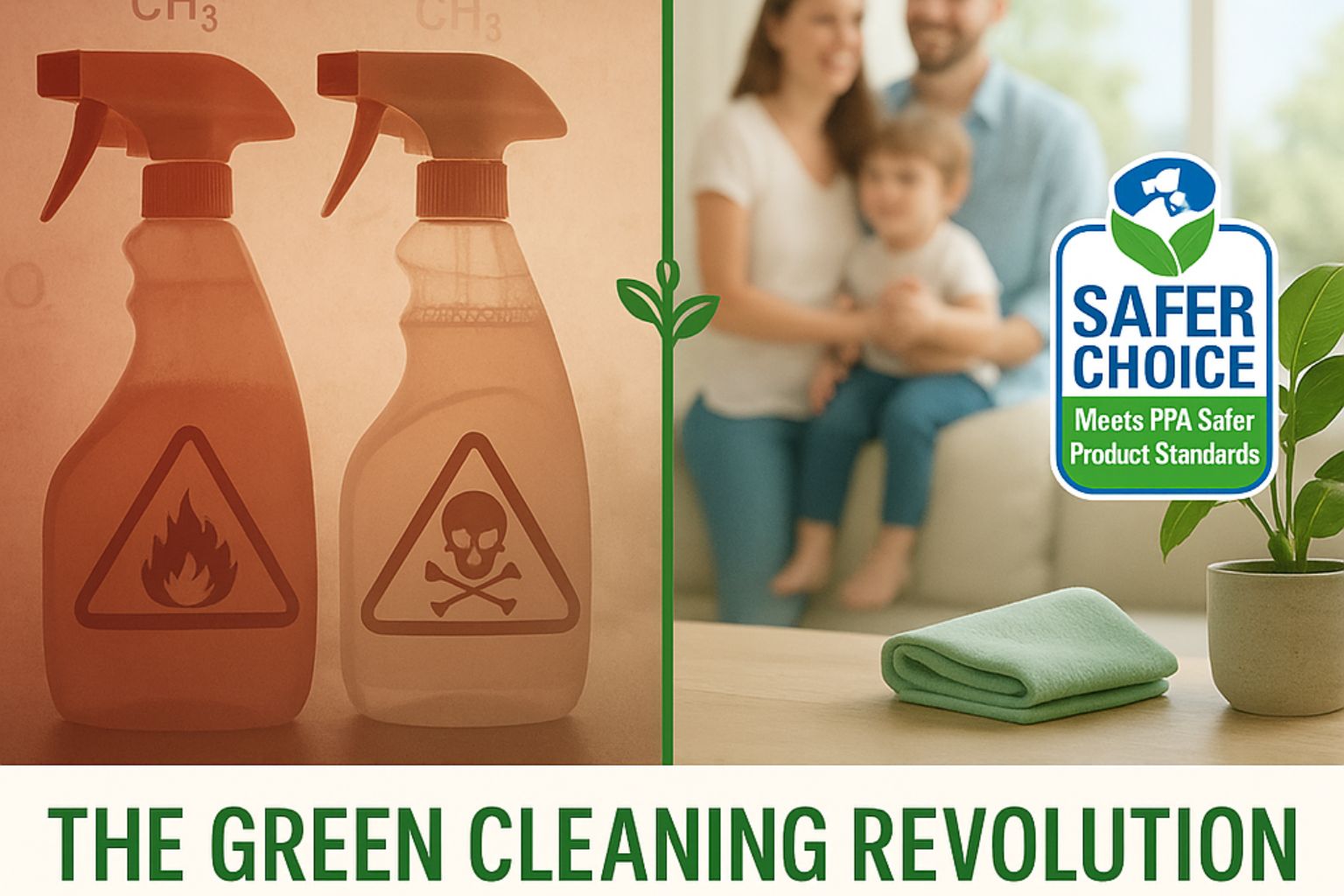
Green cleaning isn’t just a trend—it’s a health imperative backed by overwhelming scientific evidence. With 70% of consumers concerned about cleaning chemicals and research showing traditional products release hundreds of hazardous volatile organic compounds (VOCs), Pennsylvania families are increasingly choosing EPA Safer Choice certified cleaning services. This comprehensive guide explains the science behind green cleaning, decodes EPA standards, reveals the health risks of conventional products, and shows why this matters for your family’s wellbeing.
The Hidden Health Crisis in Your Cleaning Cabinet
Every day, millions of Pennsylvania families unknowingly expose themselves and their children to hundreds of hazardous chemicals through routine household cleaning. The scope of this problem is larger than most people realize.
According to Environmental Working Group research published in 2023, everyday cleaning products release hundreds of volatile organic compounds (VOCs) into indoor air. The study analyzed 30 common cleaning products and detected 530 unique VOCs, of which 193 were classified as hazardous—meaning they have potential to cause respiratory system damage, increased cancer risk, or developmental and reproductive impacts.
The scale of exposure is staggering. The EPA’s Total Exposure Assessment Methodology Study found that VOC concentrations are consistently 2 to 5 times higher indoors than outdoors, with some compounds reaching levels up to 10 times higher. During and immediately after cleaning activities, these concentrations can spike to 1,000 times normal outdoor levels.
For Pennsylvania homeowners in Chester County, Montgomery County, Bucks County, and Delaware County, where U.S. Census data shows median household incomes ranging from $111,521 to $123,041—well above the state median of $80,060—there’s both the means and motivation to invest in healthier alternatives that protect family wellbeing.
The residential and commercial cleaning industry is responding to these concerns. GM Insights reports the eco-friendly cleaning products market reached $12.2 billion in 2024 and projects growth exceeding 10% annually through 2034. This isn’t a niche market anymore—it’s mainstream recognition of a serious health issue.
What Are VOCs and Why Should Pennsylvania Families Care?
Volatile Organic Compounds (VOCs) are carbon-containing chemicals that evaporate at room temperature, becoming gases that you inhale during and after cleaning. Understanding VOCs is essential to understanding why green cleaning matters.
The Science of Indoor Air Pollution
Research published in PMC (PubMed Central) examining indoor air pollution and vulnerable groups found that VOCs derive from cleaning products, cooking practices, fragrances, fresheners, and various household activities. The study identified cleaning agents as major contributors to indoor VOC concentrations, with cleaning products containing numerous chemicals including terpenes, ammonia, formaldehyde precursors, and chlorinated compounds.
According to the American Lung Association, breathing VOCs can cause immediate health effects including:
- Eye, nose, and throat irritation
- Headaches and nausea
- Dizziness and difficulty breathing
- Worsening of asthma and COPD symptoms
Long-term exposure creates more serious concerns: liver and kidney damage, central nervous system impairment, and increased cancer risk. For families choosing house cleaning services, understanding these risks is crucial to making informed decisions.
The Chemical Reactions You Can’t See
The dangers extend beyond direct VOC exposure. California Air Resources Board research found that chemicals in cleaning products react with ozone in indoor air to produce dangerous secondary pollutants. When products containing terpenes—found in pine and citrus scents—encounter ozone, they form formaldehyde and ultrafine particles.
This chemical transformation is particularly concerning because formaldehyde is a known carcinogen with no safe exposure level according to the EPA. The California study specifically noted that formaldehyde causes strong irritation of eyes, nose, throat, and lungs, and compounds other formaldehyde sources already present in nearly all homes from building materials.
For homeowners completing renovations and seeking post-construction cleaning services, this chemical interaction becomes even more critical, as new building materials already release VOCs through a process called off-gassing.
Why Children Are Most Vulnerable
Young children face dramatically higher exposure risks than adults. Canadian research published in the Canadian Medical Association Journal examined 2,022 children and found compelling evidence that frequent cleaning product use during infancy increases respiratory disease risk.
Children’s unique vulnerabilities include:
Higher respiration rates: Children breathe faster than adults, inhaling more VOCs per pound of body weight.
Ground-level exposure: Children spend significant time on floors and carpets where VOCs accumulate in higher concentrations. Heavier-than-air chemicals settle at levels where children breathe.
Hand-to-mouth behavior: Young children constantly touch surfaces and then put hands in their mouths, creating additional exposure pathways beyond inhalation.
Developing systems: Respiratory, immune, and neurological systems are still developing, making children more susceptible to chemical damage during critical growth windows.
Time spent indoors: Research shows young children spend 80-90% of their time indoors, increasing cumulative exposure to indoor air pollutants.
The Canadian study found that infants living in homes with frequent cleaning product use were significantly more likely to develop recurrent wheeze (35% higher odds), wheeze with atopy (49% higher odds), and asthma diagnosis (37% higher odds) by age 3. Notably, the association was stronger for girls than boys, suggesting sex-specific biological responses to chemical exposures.
The Childhood Asthma Epidemic: Is Cleaning Making It Worse?
The connection between cleaning products and childhood asthma represents one of the most concerning findings in recent environmental health research. With asthma rates rising dramatically, understanding modifiable risk factors becomes critical for parents and caregivers.
Alarming Statistics on Childhood Asthma
According to the U.S. Centers for Disease Control and Prevention data cited by EWG, childhood asthma prevalence has increased dramatically:
- 1980: 3.6% of children had asthma
- 1996: 7.5% of children had asthma
- 2008: 9.3% of children had asthma
- Current: Nearly 1 in 10 U.S. children now has asthma
This represents more than a doubling of childhood asthma rates in recent decades. Asthma is now the most common chronic childhood disease and the primary reason children miss school or require hospitalization.
The Direct Link to Cleaning Products
Simon Fraser University research published in 2020 examined Canadian children from 3-4 months old until age 3, tracking cleaning product exposure and respiratory outcomes. The findings were striking:
- 11% of children in households with high cleaning product use developed chronic wheezing
- 8% of children in those same households had asthma by age 3
- In contrast, only 8% developed wheezing and 5% had asthma in households with lower product use
The study specifically implicated scented products and spray cleaners as the highest-risk items. Products most closely associated with increased asthma risk included:
- Air fresheners and deodorizers (plug-in, spray, or solid)
- Aerosol cleaning sprays
- Dusting sprays
- Antimicrobial cleaners
- Oven cleaners
- Glass cleaners in spray form
Dr. Tim Takaro, the study’s lead researcher, explained that these products don’t cause allergic asthma like pollen or dust might. Instead, they damage airway linings through inflammatory immune responses—essentially triggering the body to fight a non-existent infection, causing chronic inflammation that remodels lung tissue over time.
The Mechanism of Damage
Research published in the Canadian Medical Association Journal explains how this damage occurs. Cleaning product chemicals target respiratory epithelium (the cells lining airways), causing bronchial hyperresponsiveness and wheeze through chronic exposure. This initial damage worsens with continued exposure, leading to:
- Airway remodeling: Physical changes to lung structure
- Reduced lung function: Permanent decrease in breathing capacity
- Increased reactivity: Greater sensitivity to allergens and irritants
- Progressive disease: What starts as wheeze can become chronic asthma
Most alarmingly, follow-up research from the Childhood Asthma Management Program studying 1,041 children aged 5-12 with mild to moderate asthma found that 75% had abnormal lung growth patterns, and 11% met criteria for chronic obstructive pulmonary disease (COPD) in their twenties. What begins as childhood wheeze from cleaning product exposure can become lifelong respiratory disease.
One in Seven Adult Asthma Cases Linked to Spray Cleaners
The risks don’t end with childhood. European Community Respiratory Health Survey data following 3,503 adults who were asthma-free at baseline found that using cleaning sprays at least once weekly increased asthma symptom risk by 49%. Air-refreshing sprays showed even higher risk, with 71% increased likelihood of developing current asthma.
Critically, researchers calculated that approximately 1 in 7 cases of adult asthma could be attributed to common spray cleaner use. This represents hundreds of thousands of preventable asthma cases nationwide.
For Pennsylvania families seeking house cleaning services, these statistics underscore why asking about cleaning products and methods isn’t just a preference—it’s a health necessity.
Occupational Exposures: The Canary in the Coal Mine
Professional cleaners represent the “canary in the coal mine” for cleaning product hazards. Their higher exposures and elevated disease rates provide crucial warnings about products used in our homes.
Shocking Statistics for Cleaning Workers
Environmental Working Group research reveals that people working in the cleaning industry face dramatically elevated health risks:
- 50% higher risk of developing asthma
- 43% higher risk of chronic obstructive pulmonary disease (COPD)
- Increased risk of lung cancer among women in the field
These statistics aren’t just numbers—they represent real people whose daily exposure to cleaning chemicals causes serious, sometimes fatal, respiratory disease. The Bureau of Labor Statistics data showing a 12% employment increase in green cleaning companies over the past three years suggests the industry itself recognizes these risks and is responding.
Chemicals of Particular Concern for Workers
Research on occupational asthma identified specific cleaning agents causing elevated disease risk among healthcare workers and professional cleaners:
High-risk chemicals include:
- Quaternary ammonium compounds (common in disinfectants)
- Glutaraldehyde (medical equipment sterilization)
- Bleach and chlorinated compounds
- Ammonia-based cleaners
- Formaldehyde-releasing preservatives
Healthcare workers using cleaning products daily showed 5.37 times higher odds of developing work-related asthma. Those exposed to chloramine for six months or longer had nearly five-fold greater likelihood of occupational asthma.
The risk peaks during mixing and dilution tasks when workers encounter concentrated chemicals. This occupational evidence directly informs residential cleaning practices—if these products cause disease in healthy working adults, the risks extend to everyone exposed in homes, including vulnerable children and elderly family members.
Understanding EPA Safer Choice Certification
The EPA Safer Choice program provides a clear pathway through the confusing landscape of cleaning product claims. Understanding this certification helps Pennsylvania families make informed decisions about commercial cleaning and house cleaning services.
What EPA Safer Choice Actually Means
The EPA Safer Choice program certifies products that meet rigorous criteria for human health and environmental safety. Unlike vague marketing terms like “natural,” “eco-friendly,” or “green”—which have no legal definitions and are frequently misused—Safer Choice certification requires independent verification of every ingredient.
The certification process includes:
Ingredient-by-ingredient review: EPA scientists examine every component, regardless of concentration, including minor ingredients like dyes and fragrances that other certifications often ignore.
Health screening: Products cannot contain known carcinogens, reproductive toxicants, or developmental toxicants. The EPA maintains strict criteria eliminating the most dangerous chemical classes.
Environmental criteria: Ingredients must meet standards for aquatic toxicity, biodegradability, and environmental persistence. Products shouldn’t harm ecosystems when washed down drains.
Performance verification: Products must clean effectively. Safer Choice certification isn’t awarded to products that sacrifice cleaning power for safety—they must deliver both.
Packaging requirements: The EPA updated standards in August 2024 to ensure primary packaging doesn’t contain intentionally added PFAS or other chemicals of concern, with strengthened requirements for post-consumer recycled content and recyclability.
According to NSF certification data, the Safer Choice label carries government credibility that helps it stand out among competing green certifications. Many cleaning service companies now highlight Safer Choice products specifically because of this EPA backing.
August 2024 EPA Standards Update: What Changed
The EPA finalized significant Safer Choice standard updates in August 2024, strengthening requirements across multiple areas:
New cleaning service certification program: The EPA launched a certification program specifically for cleaning service providers using Safer Choice and DfE-certified products, protecting both workers and building occupants.
Enhanced pet care criteria: Strengthened requirements ensure pet care products use only the safest possible ingredients for humans, pets, and the environment.
PFAS restrictions: Primary packaging cannot contain any intentionally added PFAS (per- and polyfluoroalkyl substances)—the “forever chemicals” linked to numerous health concerns.
Sustainable packaging mandates: All certified products must use post-consumer recycled content and be recyclable or reusable, addressing plastic waste concerns.
Wipe product requirements: Certified wipes must include “Do Not Flush” language to protect wastewater treatment systems.
Energy efficiency incentives: Optional criteria encourage water conservation, renewable energy use, and improved manufacturing efficiency.
These 2024 updates demonstrate the EPA’s commitment to continuously raising standards as scientific understanding evolves. For commercial cleaning services in Pennsylvania, staying current with these standards ensures clients receive the safest available products.
How Safer Choice Compares to Other Certifications
Multiple “green” certifications exist in the marketplace, creating confusion about which ones are meaningful:
EPA Safer Choice: Government-backed, ingredient-level review, strict health and environmental criteria, performance verification required
Green Seal: Independent nonprofit, focuses on environmental impact and reduced toxicity, widely recognized in institutional settings
USDA Organic: Applies to agricultural products and some cleaners made with plant-based ingredients, focuses on farming practices rather than chemical safety
EWG Verified: Environmental Working Group’s certification, transparent ingredient disclosure, health-focused criteria
Leaping Bunny/Cruelty Free: Confirms no animal testing, doesn’t address ingredient safety or environmental impact
“Natural,” “Eco-Friendly,” “Green” (unsubstantiated claims): No legal definition, no verification required, often meaningless marketing terms
According to Washington State Department of Ecology, Safer Choice addresses a fundamental problem: “You shouldn’t need a PhD in toxicology to buy your cleaning products.” The program provides a simple, trustworthy label backed by government science.
Why 60% of Service Providers Now Use Safer Choice Products
Industry research from Verified Market Reports shows over 60% of green cleaning service providers now offer EPA Safer Choice certified products. This rapid adoption reflects both consumer demand and recognition of reduced liability exposure.
Professional house cleaning and commercial cleaning companies choose Safer Choice products for multiple reasons:
Client health protection: Prevents adverse reactions, respiratory issues, and chemical sensitivities among clients and their families.
Worker safety: Reduces occupational exposure risks, lowering workers’ compensation claims and improving employee retention.
Market demand: The EPA reports that 60% of U.S. commercial establishments have transitioned to environmentally responsible cleaning alternatives.
Competitive advantage: Safer Choice certification provides third-party verification that distinguishes services from competitors making unsupported green claims.
Reduced liability: Using certified products demonstrates due diligence in protecting client health, reducing legal exposure.
For Pennsylvania homeowners in Chester County, Montgomery County, Bucks County, and Delaware County, asking whether cleaning services use Safer Choice certified products is a simple but powerful way to protect family health.
The 30% Solution: Green Cleaning’s Indoor Air Quality Impact
Perhaps the most compelling data supporting green cleaning comes from indoor air quality measurements showing dramatic improvements when switching from conventional to certified green products.
EPA Indoor Air Quality Research
The EPA’s research cited by industry reports found that switching to green cleaning products can reduce indoor air pollutants by 30%. This substantial reduction addresses the EPA’s own findings that indoor VOC concentrations are consistently 2 to 5 times higher than outdoors, with peaks up to 10 times higher during and after cleaning.
A 30% reduction in indoor air pollutants translates to tangible health benefits:
Reduced respiratory irritation: Fewer episodes of coughing, wheezing, and shortness of breath, particularly for asthma and COPD sufferers.
Decreased headaches and dizziness: VOC exposure commonly causes neurological symptoms that resolve when exposure decreases.
Better sleep quality: Improved overnight air quality supports better sleep, especially for children in bedrooms cleaned with green products.
Lower chemical odor levels: “Clean” shouldn’t smell like chemicals. The absence of strong scents indicates genuinely cleaner air.
Reduced allergy symptoms: While green cleaning doesn’t address allergens like pollen and dust, it eliminates additional chemical irritants that can trigger or worsen allergic responses.
For families seeking deep cleaning services, the choice of products used during intensive cleaning sessions has particularly significant air quality impacts, as conventional deep cleaning can create indoor pollution spikes lasting for days.
Fragrance-Free: The Often-Overlooked Factor
Environmental Working Group research revealed a striking pattern: green products without fragrance emitted just 4 hazardous VOCs on average, compared to about 15 in green products with fragrance and 22 in conventional products.
This finding has major implications: fragrance is often the primary source of hazardous chemical emissions, even in products marketed as “green.”
Research published in PMC analyzed VOCs from scented consumer products and found that a single fragrance can contain hundreds of chemicals. Common scent compounds like limonene (citrus) and pinene (pine) react with indoor ozone to form formaldehyde and ultrafine particles—turning seemingly innocent “lemon fresh” into a chemical reaction factory.
The study detected 133 different VOCs from 25 scented products tested, with the most common being:
- Limonene (citrus scents)
- Alpha- and beta-pinene (pine scents)
- Ethanol and acetone (fragrance carriers)
Critically, even products advertised as “green,” “natural,” or “organic” emitted as many hazardous chemicals as standard products when they contained fragrances. Of the chemicals detected, only 1-2 were ever listed on product labels or Material Safety Data Sheets, leaving consumers completely unaware of their exposures.
The Greenwashing Problem
Business Research Insights reports identify greenwashing—false claims of environmental friendliness—as a growing challenge in the household green cleaning market. Companies make vague sustainability claims without meeting real standards, exploiting consumer desire for safer products.
Common greenwashing tactics include:
- Using green packaging colors and nature imagery without changing formulations
- Highlighting one “natural” ingredient while using multiple toxic chemicals
- Creating meaningless certification-looking logos that aren’t real third-party verifications
- Using terms like “eco-friendly” or “green” without defining what that means
- Claiming “plant-based” while still including harmful synthetic chemicals
- Marketing “fragrance-free” products that still contain respiratory irritants
This is why third-party certifications like EPA Safer Choice matter—they cut through marketing hype to verify actual ingredient safety. When choosing house cleaning or commercial cleaning services, asking specifically about EPA Safer Choice certification prevents falling victim to greenwashing.
Pennsylvania’s Environmental Leadership and Green Initiatives
Pennsylvania has emerged as a leader in environmental sustainability, with state-level initiatives that support and encourage green cleaning adoption across residential and commercial sectors.
Pennsylvania Climate Action Plan 2024
The Pennsylvania Department of Environmental Protection’s Climate Action Plan 2024 outlines comprehensive strategies for reducing greenhouse gas emissions across all major sectors. The plan identifies 22 strategies spanning built environment, transportation, industrial operations, and waste management.
Key elements relevant to green cleaning and indoor environmental quality include:
Built environment improvements: The plan addresses indoor air quality through building design, ventilation standards, and material selection that collectively reduce chemical exposure in homes and workplaces.
Waste reduction programs: Emphasis on reducing chemical waste from cleaning products and promoting sustainable packaging aligns with EPA Safer Choice’s updated packaging requirements.
Health outcome integration: The plan explicitly connects environmental improvements to health outcomes, recognizing that cleaner indoor environments benefit public health.
Economic growth through sustainability: Pennsylvania frames environmental action as economic opportunity, positioning green service providers for growth as standards tighten.
For commercial cleaning services operating in Pennsylvania, alignment with state climate goals creates competitive advantage as businesses seek service providers who support their sustainability commitments.
University Leadership: Penn’s 100 x 42 Goal
The University of Pennsylvania’s Climate and Sustainability Action Plan sets an ambitious goal of 100% carbon neutrality by 2042—known as “100 x 42.” This initiative encompasses campus operations, including cleaning practices.
Penn’s comprehensive approach includes:
Green cleaning product standards: The university requires use of EPA Safer Choice and Green Seal certified products across campus facilities.
Staff training programs: Custodial staff receive training on green cleaning methods, proper product dilution, and exposure minimization.
Indoor air quality monitoring: The university tracks IAQ metrics to verify that cleaning practices don’t compromise air quality.
Waste reduction: Concentrated products, refillable containers, and bulk purchasing reduce packaging waste.
Procurement policies: Penn Procurement Services incorporates sustainability and equity into purchasing decisions, setting standards that influence supplier markets.
According to Penn Sustainability reports, the university has reduced carbon emissions by 46% since 2009 and is on track to surpass U.S. greenhouse gas reduction targets six years early.
Penn’s 43 LEED-certified buildings demonstrate that sustainable operations, including green cleaning, integrate into high-performance facilities. For commercial cleaning providers serving Pennsylvania’s educational institutions, understanding these standards is essential for contract qualifications.
LEED Certification and Green Cleaning Requirements
Many Pennsylvania commercial buildings pursue Leadership in Energy and Environmental Design (LEED) certification, which includes specific cleaning requirements. The Pennsylvania Convention Center’s LEED certification, for example, requires:
- 100% use of Green Seal-certified cleaning products
- Comprehensive recycling and waste diversion programs
- Energy-efficient operations across all systems
- Regular sustainability reporting and third-party verification
The Convention Center’s achievements demonstrate that large-scale facilities can maintain high cleanliness standards using certified green products exclusively. This real-world performance data counters myths that green products don’t clean as effectively as conventional alternatives.
Regional Environmental Initiatives
PennEnvironment’s 2023-2024 Legislative Priorities include multiple initiatives that indirectly support green cleaning adoption:
Regional Greenhouse Gas Initiative (RGGI): Pennsylvania’s participation in this multi-state climate program creates incentives for reducing carbon footprints across all operations, including cleaning services.
Clean energy promotion: Increased clean energy use in buildings reduces the overall environmental impact of building operations, including energy-intensive cleaning equipment.
Pollution reduction programs: Emphasis on reducing toxic chemical releases creates regulatory environment favoring safer products.
Environmental justice focus: Recognition that pollution disproportionately affects low-income and minority communities supports policies requiring safer products in all buildings, not just affluent areas.
For homeowners in Chester County, Montgomery County, Bucks County, and Delaware County, these state and regional initiatives create an ecosystem supporting green cleaning choices.
Traditional vs. Green Cleaning: The Real Comparison
Understanding the actual differences between conventional and green cleaning products helps Pennsylvania families make informed choices about house cleaning and deep cleaning services.
Cleaning Effectiveness: Debunking the Myths
A persistent myth suggests green products don’t clean as effectively as conventional alternatives. This misconception often stems from early green products (1990s-2000s) that prioritized safety over performance.
Modern EPA Safer Choice certified products must demonstrate equivalent cleaning performance to conventional products. The EPA’s certification process includes rigorous performance testing—products that don’t clean effectively don’t receive certification, regardless of their safety profile.
Real-world evidence supports green product effectiveness:
Pennsylvania Convention Center: Uses 100% Green Seal-certified products while maintaining facility cleanliness standards for major conventions and events.
University of Pennsylvania: Manages 43 LEED-certified buildings using only certified green products, maintaining high cleanliness standards across dormitories, laboratories, and public spaces.
Healthcare facilities: Many hospitals now use green-certified products in patient rooms and operating areas where cleanliness is literally life-or-death—they wouldn’t risk patient safety with ineffective products.
The performance gap has closed. Today’s EPA Safer Choice certified products deliver professional-grade cleaning while eliminating health hazards. For commercial cleaning applications, this means no compromise between safety and cleanliness.
Cost Comparison: Breaking Down the Numbers
Green cleaning products typically cost 10-30% more than conventional alternatives at retail prices, but this surface comparison misses important factors:
Concentrate formulations: Many green products are more concentrated, so smaller amounts achieve equal results. A $15 concentrated green cleaner lasting twice as long effectively costs $7.50 when compared fairly.
Health cost savings: The EPA’s finding that green products reduce indoor pollutants by 30% translates to reduced healthcare costs from fewer respiratory issues, allergy symptoms, and chemical sensitivity reactions.
Professional service costs: When comparing house cleaning services, most companies charge similar rates regardless of products used. The per-cleaning cost difference is often zero from the customer’s perspective.
Workers’ compensation: Professional cleaning companies using green products often see reduced workers’ compensation claims and better employee retention, offsetting product costs.
Environmental externalities: Conventional products create wastewater treatment challenges, ecosystem damage, and long-term environmental costs not reflected in purchase price.
For Pennsylvania families with median household incomes of $80,060 statewide and over $110,000 in the counties Quality Time Cleaning serves, the modest price premium for green products represents a small investment in family health protection.
Chemical Content Comparison
The chemical differences between conventional and green cleaning products are substantial:
Conventional All-Purpose Cleaner Typical Ingredients:
- 2-butoxyethanol (glycol ether – respiratory irritant, linked to reproductive harm)
- Ammonia (severe respiratory irritant, reacts with bleach to form toxic gas)
- Alkylphenol ethoxylates (endocrine disruptors, toxic to aquatic life)
- Synthetic fragrances (mixture of dozens to hundreds of undisclosed chemicals)
- Phosphates (environmental pollutants causing algae blooms)
- Chlorine bleach (respiratory irritant, forms toxic byproducts)
EPA Safer Choice Certified All-Purpose Cleaner Typical Ingredients:
- Plant-derived surfactants (effective cleaning, biodegradable)
- Citric acid (natural degreaser, food-grade safety)
- Ethanol (evaporates quickly, low toxicity)
- Essential oils or no fragrance (if fragrance used, must meet safety criteria)
- Water and mineral-based builders
- pH-balanced formulations
The difference isn’t just academic. Environmental Working Group research found conventional products release an average of 22 hazardous VOCs, while fragrance-free green products release just 4 on average—an 82% reduction in hazardous chemical emissions.
Long-Term Health Impact Comparison
While acute exposures to conventional cleaning products cause immediate symptoms (headaches, respiratory irritation, dizziness), chronic long-term exposures create more serious concerns:
Conventional Product Long-Term Risks:
- Respiratory system remodeling and permanent lung function decline
- Increased asthma development risk (remember: 1 in 7 adult asthma cases linked to spray cleaners)
- Endocrine disruption affecting reproductive health and development
- Neurotoxic effects on brain development in children
- Cancer risk from carcinogenic chemicals and impurities
- Chemical sensitivity development making future exposures more problematic
Green Product Long-Term Profile:
- Minimal respiratory irritation
- No endocrine disrupting chemicals
- Reduced cancer risk (certified products cannot contain known carcinogens)
- Lower allergic sensitization rates
- Reduced chemical sensitivity development
- The EPA’s 30% reduction in indoor pollutants compounds over time
For families making decisions about house cleaning services, these long-term differences matter more than short-term cost considerations. Protecting children during critical developmental windows and preventing chronic respiratory disease justifies modest price premiums.
DIY Green Cleaning: Simple, Effective, and Safe
While professional house cleaning and deep cleaning services provide convenience and expertise, Pennsylvania families can also implement green cleaning practices themselves using simple, effective ingredients.
The Core Four: Essential Green Cleaning Ingredients
Four basic ingredients handle 80% of household cleaning needs safely and effectively:
White Vinegar (Acetic Acid – 5% solution)
- What it does: Cuts grease, dissolves mineral deposits, disinfects surfaces, neutralizes odors
- Where to use: Glass, countertops, floors, bathroom surfaces, appliances
- Cost: $0.02-0.03 per ounce (dramatically cheaper than commercial cleaners)
- Safety: Food-grade safety, no health hazards, completely biodegradable
- Limitation: Don’t use on natural stone (marble, granite) – the acid can etch surfaces
Baking Soda (Sodium Bicarbonate)
- What it does: Mild abrasive, deodorizer, gentle scrubbing power, absorbs odors
- Where to use: Sinks, tubs, tile, oven cleaning, carpet deodorizing, refrigerator odor control
- Cost: $0.01-0.02 per ounce
- Safety: Food-grade, completely non-toxic, safe for all surfaces including septic systems
- Bonus: Creates gentle scrubbing action without scratching most surfaces
Castile Soap (Plant-Based Liquid Soap)
- What it does: Effective general-purpose cleaner, cuts grease, gentle on surfaces
- Where to use: Dishes, floors, countertops, general household cleaning
- Cost: $0.10-0.15 per ounce (concentrate dilutes 1:10 or more)
- Safety: Biodegradable plant oils, no synthetic chemicals, greywater-safe
- Variety: Available unscented or with essential oils for those who prefer scent
Hydrogen Peroxide (3% solution)
- What it does: Disinfects, whitens, removes stains, kills mold and mildew
- Where to use: Bathroom surfaces, cutting boards, disinfection needs, laundry whitening
- Cost: $0.03-0.05 per ounce
- Safety: Breaks down to water and oxygen, no toxic residues, EPA-registered disinfectant
- Note: Store in original dark bottle – breaks down in light
Effective DIY Recipes for Common Cleaning Tasks
All-Purpose Cleaner:
- 1 part white vinegar
- 1 part water
- Optional: 10-15 drops essential oil (lemon, tea tree, lavender)
- Mix in spray bottle, shake before use
- Works on: Countertops, appliances, glass, most hard surfaces
- Cost per bottle: $0.50-0.75 vs. $3-6 for commercial products
Heavy-Duty Scrubbing Paste:
- 1/2 cup baking soda
- 1/4 cup castile soap
- 5-10 drops essential oil (optional)
- Mix to paste consistency, add water if too thick
- Works on: Baked-on oven messes, tub rings, sink stains, tile grout
- Cost per batch: $0.25-0.40
Glass and Mirror Cleaner:
- 1 cup water
- 1 cup white vinegar
- Works on: Windows, mirrors, glass surfaces
- Method: Spray, wipe with microfiber cloth for streak-free shine
- Cost per bottle: $0.20-0.30
Disinfecting Spray:
- 1 cup water
- 1/4 cup hydrogen peroxide (3%)
- 10-15 drops tea tree or thyme essential oil
- Works on: Bathroom surfaces, cutting boards, high-touch areas
- Method: Spray, let sit 5-10 minutes, wipe clean
- Cost per bottle: $0.40-0.60
- EPA-registered: Hydrogen peroxide is an EPA-registered disinfectant
Floor Cleaner:
- 1 gallon warm water
- 1/4 cup white vinegar
- 2 tablespoons castile soap
- Works on: Tile, vinyl, laminate, sealed wood floors
- Method: Mop as usual, no rinsing required
- Cost per gallon: $0.15-0.25
When DIY Isn’t Enough: Choosing Professional Green Cleaning
While DIY green cleaning works well for maintenance, certain situations benefit from professional expertise and equipment:
Post-renovation or post-construction scenarios: Post-construction cleaning requires specialized equipment to address construction dust, debris, and residues that basic home cleaning can’t handle effectively.
Deep cleaning after extended neglect: Professional deep cleaning services have commercial-grade equipment for carpet extraction, upholstery cleaning, and intensive surface restoration.
Move-in/move-out situations: Move-in/move-out cleaning ensures properties meet landlord or buyer expectations with documented thoroughness.
Regular maintenance for busy families: Weekly or biweekly house cleaning services free up time for Pennsylvania families while maintaining high cleanliness standards.
Commercial facilities: Commercial cleaning requires trained staff, appropriate insurance, and compliance with building standards.
When choosing professional services in Chester County, Montgomery County, Bucks County, or Delaware County, specifically asking about EPA Safer Choice certification ensures professional results without compromising family health.
Special Considerations for Vulnerable Populations
Certain Pennsylvania residents face elevated risks from conventional cleaning products and benefit most from green cleaning alternatives.
Pregnant Women and Developing Babies
Research published in Frontiers in Epidemiology examining maternal occupational exposure to cleaning chemicals during pregnancy found associations between prenatal exposure and childhood respiratory issues. While the study focused on occupational exposures, the findings raise concerns about residential exposures during pregnancy.
Pregnancy-specific concerns include:
Fetal development windows: Critical organ development occurs during first trimester when many women don’t yet know they’re pregnant and may continue intensive cleaning.
Increased respiration rate: Pregnant women breathe more deeply and frequently, increasing VOC absorption.
Placental transfer: Many VOCs cross the placental barrier, directly exposing the developing fetus.
Hormonal sensitivity: Endocrine-disrupting chemicals in conventional cleaners interfere with hormones critical for fetal development.
Pregnant Pennsylvania women should prioritize green cleaning methods or house cleaning services using EPA Safer Choice products, especially during first trimester when organogenesis (organ formation) is most vulnerable to chemical disruption.
Infants and Young Children
We’ve discussed extensively how Canadian research found that infant exposure to cleaning products increases asthma risk by 35-49%. Additional considerations for young children include:
Crawling stage exposures: Babies spend extensive time on floors where chemicals accumulate, with constant hand-to-mouth contact transferring chemicals directly.
Developing immune systems: Early-life chemical exposures can permanently alter immune system development, potentially increasing allergy and autoimmune disease risks.
Neurological development: The brain develops rapidly during first three years. Neurotoxic chemicals in conventional cleaners can impact cognitive development.
Higher metabolism: Children’s faster metabolism means they process chemicals differently than adults, often with greater impact.
For families with infants and toddlers, switching to EPA Safer Choice certified products or services represents one of the most impactful health protection measures available.
Asthma and COPD Sufferers
Individuals with existing respiratory disease face acute risks from conventional cleaning products. American Lung Association recommendations emphasize avoiding VOCs, fragrances, and irritants—all abundant in conventional cleaners.
Asthma-specific risks include:
Attack triggers: VOCs, fragrances, and spray aerosols directly trigger bronchospasm and asthma attacks.
Reduced lung function: Chemical irritation causes inflammation that further reduces already-compromised lung capacity.
Medication interference: Chemical exposures can reduce effectiveness of asthma medications.
Emergency room visits: Cleaning product exposures are a documented cause of asthma-related ER visits and hospitalizations.
Families with asthmatic members should use only fragrance-free EPA Safer Choice certified products and ensure any house cleaning services follow the same standards.
Elderly Residents with Multiple Health Conditions
Senior citizens often have multiple health conditions that increase vulnerability to cleaning product chemicals:
Reduced detoxification capacity: Aging liver and kidneys process chemicals less efficiently, allowing greater accumulation.
Medication interactions: Some cleaning chemicals interact with common medications.
Cognitive impacts: VOC exposures can worsen cognitive function in those with dementia or mild cognitive impairment.
Balance and fall risk: Chemical-induced dizziness increases fall risk in elderly with balance issues.
Pennsylvania’s aging population—U.S. Census data shows 55.8 million Americans (16.8% of the population) were 65 or older in 2020—makes this consideration increasingly important for house cleaning services.
Individuals with Chemical Sensitivities
An estimated 12-13% of Americans report chemical sensitivities, experiencing symptoms from low-level chemical exposures that don’t affect others. For these individuals, conventional cleaning products can cause severe reactions including:
- Severe headaches and migraines
- Extreme fatigue
- Difficulty concentrating (“brain fog”)
- Respiratory distress
- Skin reactions and hives
- Gastrointestinal symptoms
Green cleaning using simple, unscented products often allows chemically-sensitive individuals to maintain clean homes without debilitating reactions. For these Pennsylvania residents, green cleaning isn’t a preference—it’s a necessity for maintaining quality of life.
Questions Pennsylvania Families Should Ask Cleaning Services
When evaluating house cleaning, deep cleaning, or commercial cleaning services, asking the right questions about products and practices protects your family’s health.
Essential Product Questions
“Do you use EPA Safer Choice certified products?”
This straightforward question cuts through vague “green” or “eco-friendly” claims. If the answer is yes, ask which specific products. If no, ask why not and what alternative certifications they use.
“Are your products fragrance-free?”
Remember that EWG research found fragrance is the primary source of hazardous VOCs, even in green products. Fragrance-free should be standard for health-conscious families.
“Can you provide Material Safety Data Sheets (MSDS) or product ingredient lists?”
Reputable companies can provide this documentation. Reluctance to share ingredient information is a red flag suggesting products they don’t want customers to know about.
“Do you offer both green and conventional cleaning options?”
If yes, ask about price differences. Many companies charge the same rate regardless of products, making green cleaning a no-cost upgrade.
“What specific health or environmental certifications do your products carry?”
Look for EPA Safer Choice, Green Seal, EWG Verified, or other legitimate third-party certifications, not internal “green” claims.
Questions About Application Methods
“Do you use spray bottles or spray-free application methods?”
Spray application creates fine aerosols that linger in air and increase inhalation exposure. Spray-free methods (applying products to cloths rather than surfaces) dramatically reduce airborne chemical exposure.
“How do you ensure ventilation during and after cleaning?”
Proper ventilation reduces VOC accumulation. Professional services should open windows when weather permits and time cleaning to allow airing before family members return.
“What’s your protocol for clients with asthma, allergies, or chemical sensitivities?”
Companies experienced with sensitive populations have specific protocols including fragrance-free products, advance notification before service, and extra ventilation time.
Training and Safety Questions
“What training do your employees receive on green cleaning methods?”
Green cleaning requires different techniques than conventional cleaning. Proper dilution, dwell times, and application methods matter for effectiveness.
“Are your employees protected from chemical exposures?”
If a company doesn’t protect its own workers from their products, that’s concerning for your family’s exposure.
“Do you have workers’ compensation insurance?”
This protects you from liability if a worker is injured in your home and demonstrates the company invests in worker protection.
Red Flags to Watch For
Certain responses should prompt caution about a cleaning service:
- Vague claims about being “green” without specific certifications
- Inability or unwillingness to list products used
- Dismissing health concerns as “overblown” or “not a real issue”
- Insisting conventional products are “perfectly safe” despite research showing otherwise
- Significantly lower prices than competitors (may indicate use of cheapest, lowest-quality products)
- No worker protection equipment or training
- Unwillingness to accommodate fragrance-free or green product requests
Quality Time Cleaning’s Green Cleaning Approach
At Quality Time Cleaning, our commitment to green cleaning reflects both scientific evidence and genuine care for Pennsylvania families’ wellbeing. We recognize that market research shows 70% of consumers worry about cleaning chemicals, and we’ve responded by making green cleaning our standard approach, not an upcharge.
Our EPA Safer Choice Commitment
All our house cleaning, deep cleaning, and commercial cleaning services use EPA Safer Choice certified products exclusively. This ensures every client receives the same health protection regardless of which service package they choose.
We specifically selected EPA Safer Choice certification over other green standards because of the program’s:
- Government backing and scientific rigor
- Ingredient-by-ingredient review process
- Performance verification requirements
- Clear labeling that clients can verify themselves
When we claim green cleaning, clients can check our product labels and see the EPA Safer Choice logo confirming independent verification.
Fragrance-Free by Default
Following Environmental Working Group findings that fragrance is the primary source of hazardous VOCs even in green products, we use fragrance-free formulations as our standard approach.
We understand some clients associate “clean” with scent, so we explain that truly clean spaces smell like nothing at all—the absence of chemical odors indicates genuinely clean air, not masked odors.
Spray-Free Application Methods
Wherever practical, we apply cleaning products to microfiber cloths rather than spraying directly onto surfaces. This method:
- Reduces VOC emissions into breathing zones
- Prevents aerosol formation that lingers in air
- Uses less product (reducing both cost and exposure)
- Provides better control for spot cleaning
- Protects electronic equipment from overspray
For situations where spray application is necessary (like shower walls), we use low-pressure spray bottles and ensure proper ventilation.
Microfiber Technology
Our cleaning teams use professional-grade microfiber cloths and mops that mechanically remove dirt and bacteria without requiring harsh chemicals. Microfiber’s unique structure traps particles at the microscopic level, making it far more effective than traditional cleaning cloths.
Combined with EPA Safer Choice products, this approach delivers superior cleaning results while minimizing chemical usage.
Service Area Coverage with Local Focus
We serve Pennsylvania homeowners and businesses throughout Chester County, Montgomery County, Bucks County, and Delaware County. These counties represent Pennsylvania’s most health-conscious markets, where residents understand the connection between environmental quality and personal wellness.
With U.S. Census data showing Chester County leading Pennsylvania at $123,041 median household income, followed by Bucks County at $111,951 and Montgomery County at $111,521, our service area represents families who prioritize health investments and expect services that protect rather than compromise wellbeing.
Comprehensive Service Integration
Green cleaning principles apply across all our services:
House Cleaning: Weekly, biweekly, or monthly maintenance using EPA Safer Choice products maintains consistently healthy indoor air quality.
Deep Cleaning: Intensive cleaning sessions benefit most from green products, as conventional deep cleaning creates the worst indoor pollution spikes.
Post-Construction Cleaning: New home construction already off-gasses VOCs from building materials—adding conventional cleaning chemicals compounds the problem during a critical period.
Move-In/Move-Out Cleaning: Green cleaning ensures new occupants enter a chemically-clean space, not one contaminated with cleaning product residues.
Commercial Cleaning: Pennsylvania businesses increasingly recognize employee health impacts productivity. Green cleaning protects worker health while meeting LEED and other sustainability standards.
The Future of Green Cleaning: Market Trends and Predictions
The green cleaning revolution isn’t slowing down—it’s accelerating. Understanding market trends helps Pennsylvania families and businesses prepare for what’s coming.
Explosive Market Growth Projections
Verified Market Reports projects the green cleaning services market will nearly double from $11.5 billion in 2026 to $20.1 billion by 2033, growing at 8.3% annually. This growth rate significantly exceeds the 6.9% growth rate for the overall cleaning services market.
Meanwhile, GM Insights projects the eco-friendly cleaning products market will grow at over 10% annually from its 2024 baseline of $12.2 billion through 2034.
Growth drivers include:
Consumer health awareness: The 70% of consumers worried about cleaning chemicals are increasingly choosing certified green alternatives.
Regulatory pressure: Government buildings, schools, and healthcare facilities increasingly mandate green cleaning standards.
Corporate sustainability commitments: The EPA’s finding that 60% of U.S. commercial establishments now use environmentally responsible cleaning demonstrates corporate sector adoption.
Employee protection: Recognition that professional cleaners face 50% higher asthma risk and 43% higher COPD risk drives companies toward safer products.
Insurance and liability: Using certified products reduces liability exposure when occupants experience health problems.
Technology Integration
The future of green cleaning includes technology integration that improves both effectiveness and verification:
Real-time air quality monitoring: Sensors detect VOC levels before, during, and after cleaning, providing objective data on air quality impacts.
Product verification systems: QR codes on certified products allow instant verification of ingredients and certifications.
Automated dilution systems: Commercial facilities use automated systems that perfectly dilute concentrated products, eliminating waste and exposure to concentrates.
UV-C disinfection: Ultraviolet light disinfection provides chemical-free pathogen elimination for high-touch surfaces.
Electrolyzed water systems: Technology that creates powerful cleaning and disinfecting solutions from just salt and water, eliminating need for chemical products.
Regulatory Evolution
Pennsylvania and federal regulations continue evolving to address cleaning product safety:
Ingredient disclosure requirements: Growing pressure for manufacturers to fully disclose all ingredients, including fragrances and preservatives currently exempt from labeling.
VOC emission limits: California’s stringent VOC regulations for consumer products increasingly influence national product formulations.
PFAS restrictions: The EPA’s August 2024 update banning intentionally added PFAS in Safer Choice packaging represents broader PFAS elimination trends.
Professional certification programs: The new EPA Safer Choice certification for cleaning service providers creates market incentives for professional adoption.
Educational Initiatives
Growing recognition of cleaning product health impacts drives educational programs:
School curriculum integration: Environmental health concepts including cleaning product safety increasingly appear in health and science curricula.
Healthcare provider training: Medical professionals receive training to recognize chemical exposures and counsel patients on safer alternatives.
Public health campaigns: State and local health departments develop campaigns addressing indoor air quality and cleaning product safety.
Professional training standards: Green cleaning certifications become standard for professional cleaning workers, similar to food safety certifications for restaurant workers.
For Pennsylvania families, these trends suggest that today’s choice to use green cleaning services represents the mainstream future, not a niche preference.
Taking Action: Your Green Cleaning Transition Plan
Ready to protect your family through green cleaning? Here’s a practical implementation plan for Pennsylvania homeowners.
Phase 1: Immediate Changes (This Week)
Stop buying spray cleaners immediately. These products present the highest risk according to research showing they cause 1 in 7 adult asthma cases. Replace with vinegar and water in spray bottles.
Remove air fresheners and scented products. EWG research showed these emit the most hazardous VOCs. Eliminate plug-ins, sprays, and scented candles.
Increase ventilation during and after cleaning. Open windows whenever cleaning, even with green products, to maximize air exchange.
Make DIY all-purpose cleaner. Mix 1:1 vinegar and water. This handles 80% of household cleaning needs immediately and safely.
Phase 2: Short-Term Improvements (This Month)
Replace conventional products as they run out. Don’t waste products you’ve purchased, but don’t repurchase conventional versions. Replace each with EPA Safer Choice certified alternatives.
Download EWG’s Guide to Healthy Cleaning app. This free resource helps identify safer products and rates common cleaners on health and environmental criteria.
Invest in quality microfiber cloths. Professional-grade microfiber reduces need for chemical products while improving cleaning effectiveness.
Evaluate professional cleaning services. If you currently use a cleaning service, ask about their products. If they don’t use EPA Safer Choice certified products, consider switching to a service that does, like Quality Time Cleaning.
Phase 3: Long-Term Sustainability (Ongoing)
Educate family members. Help everyone understand why green cleaning matters and how to implement it correctly.
Monitor children’s respiratory health. Track any changes in asthma symptoms, wheeze frequency, or allergy severity after transitioning to green cleaning.
Support green cleaning policies. Advocate for green cleaning in your children’s schools, your workplace, and public buildings you frequent.
Share information with others. Pennsylvania families benefit when neighbors and friends also adopt safer practices, as it reduces overall community chemical exposure.
Annual product review. Certifications and formulations change. Review products annually to ensure they still meet Safer Choice or equivalent standards.
Budget-Friendly Transition Tips
Green cleaning doesn’t require major financial investment:
DIY basics first: Vinegar, baking soda, and castile soap cost pennies per ounce and handle most cleaning needs. This actually saves money compared to conventional products.
Buy concentrated products: EPA Safer Choice certified concentrates often cost less per use than conventional ready-to-use products when properly diluted.
Focus on high-impact changes: Replacing spray cleaners and air fresheners provides maximum health benefit for minimal cost.
Consider professional services: For busy Pennsylvania families with median incomes of $80,060 statewide or $111,000+ in our primary service counties, professional house cleaning services using green products may cost less than you think while freeing up time and ensuring proper implementation.
Conclusion: The Health Imperative of Green Cleaning
The science is clear, comprehensive, and compelling: conventional cleaning products release hundreds of hazardous chemicals into indoor air, where concentrations reach 2-10 times outdoor levels. These exposures contribute to the childhood asthma epidemic, cause 1 in 7 adult asthma cases, and create serious occupational disease among cleaning workers.
The evidence isn’t theoretical—it’s documented in peer-reviewed research from institutions like Simon Fraser University, the EPA, and the Environmental Working Group. The health impacts affect real families, particularly vulnerable populations including infants, pregnant women, children, elderly residents, and those with existing respiratory conditions.
Pennsylvania families have both the awareness and the means to make different choices. With U.S. Census data showing median household incomes of $123,041 in Chester County, $111,951 in Bucks County, and $111,521 in Montgomery County—well above the state median of $80,060—residents in these areas demonstrate the capacity to invest in health-protecting alternatives.
The green cleaning market growth projections—from $11.5 billion to $20.1 billion by 2033 for services, and over 10% annual growth for products—reflect widespread recognition that this shift isn’t optional. It’s a health imperative backed by overwhelming scientific evidence.
Pennsylvania’s environmental leadership through initiatives like the Climate Action Plan 2024, University of Pennsylvania’s 100 x 42 goal, and various regional sustainability programs creates an ecosystem that supports and encourages green cleaning adoption across residential and commercial sectors.
The EPA Safer Choice program provides clear, government-backed certification that cuts through marketing confusion and greenwashing. When Pennsylvania families choose cleaning services using EPA Safer Choice certified products, or purchase these products for DIY cleaning, they’re making evidence-based decisions that protect family health while supporting a market shift toward safer alternatives.
For families seeking professional cleaning services, the choice between conventional and green cleaning isn’t about aesthetics or preferences—it’s about protecting the people you love from documented health hazards. Whether you need house cleaning, deep cleaning, post-construction cleaning, move-in/move-out cleaning, or commercial cleaning in Chester County, Montgomery County, Bucks County, or Delaware County, asking about EPA Safer Choice certification should be your first question.
The green cleaning revolution isn’t coming—it’s here. The question is whether you’ll join the movement protecting Pennsylvania families from preventable chemical exposures, or continue practices we now know cause serious health harm.
Ready to protect your family through professional green cleaning? Request a free estimate from Quality Time Cleaning, or explore our EPA Safer Choice certified house cleaning, deep cleaning, and commercial cleaning services that put your family’s health first.